
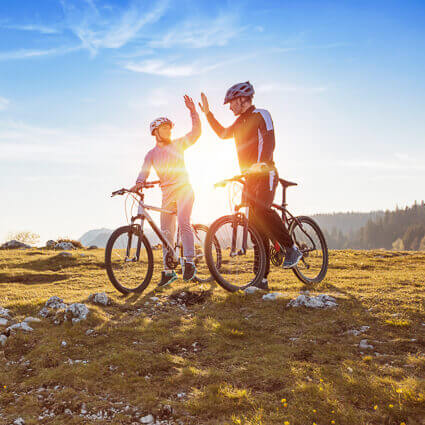
 Mountain biking Carmel Mountain’s trails is a great way to spend a Rancho Bernardo afternoon, but the same terrain that makes it fun also sends riders into our office. Most of the injuries Dr. Cameron Sutter sees are preventable with a few habits built into your ride routine.
The Injuries We See Most on Carmel Mountain Trails
Most bike injuries aren’t dramatic falls. They build slowly, from the same motion repeated mile after mile. Tight hips, low back tension, hand numbness, and neck or upper back pain top the list. Faster, more acute injuries (wrist sprains, shoulder strains, knee pain, occasional low back injuries) tend to happen when a rider hits a rut or takes a spill. On advanced trails, falls can lead to something more serious, like a fractured collarbone or a torn shoulder muscle.
Simple Habits That Keep Riders Out of Our Office
Stretch before and after every ride, stay hydrated, and give your body real rest between rides so fatigue doesn’t set in. If a small ache shows up anyway, ice it, try a CBD cream, and take an Epsom salt bath that evening. Numbness in the hands or shoulders is worth a chiropractic evaluation or massage therapy sooner rather than later, before it becomes something bigger.
“At the first signs of any of those stress symptoms, get checked out to see what’s going on, not just to get out of pain, but to make sure your body’s in better function so you can continue the sport that you love,” says Dr. Cameron Sutter.
What to Do If You Get Hurt Mid-Ride
If you go down, check for red flags first: dizziness, nausea, or bleeding that won’t stop. Either one means calling 911, particularly if you can’t safely get yourself out. A suspected fracture, like a wrist or collarbone, needs urgent care and an X-ray quickly to prevent long-term damage. Otherwise, the instinct to push through and finish is the wrong one.
Slow down, get back to your car, and let your body settle. A cramping calf or an aching wrist can turn into an Achilles injury or a shoulder problem fast, especially once you start compensating.
Know Your Trail Before You Ride It
Carmel Mountain has beginner-friendly and genuinely advanced terrain sitting close together (and it’s not always obvious which is which). An easy-looking stretch can turn a corner into a 6-foot drop with no warning. If you’re trying a new advanced trail, ride with someone who already knows it.
Beyond that, run through the basics before you leave the driveway: a good helmet and footgear, brakes front and back that work well, shifters that move smoothly, properly inflated tires, and gloves or padding on technical terrain.
How Chiropractic Care Helps You Keep Riding
A tense shoulder or stiff neck after a ride is often a sign your upper back and neck are out of alignment, and repeating that motion ride after ride makes it worse. Getting checked early isn’t just about pain relief. It’s about staying in the sport. Contact Elements of Health today to book an appointment.